Portal | Application for Admission | HRM | Email | LMS | Exam | Procedures Manual | Student Exchange | Repository | Research Journal | Jobs | 


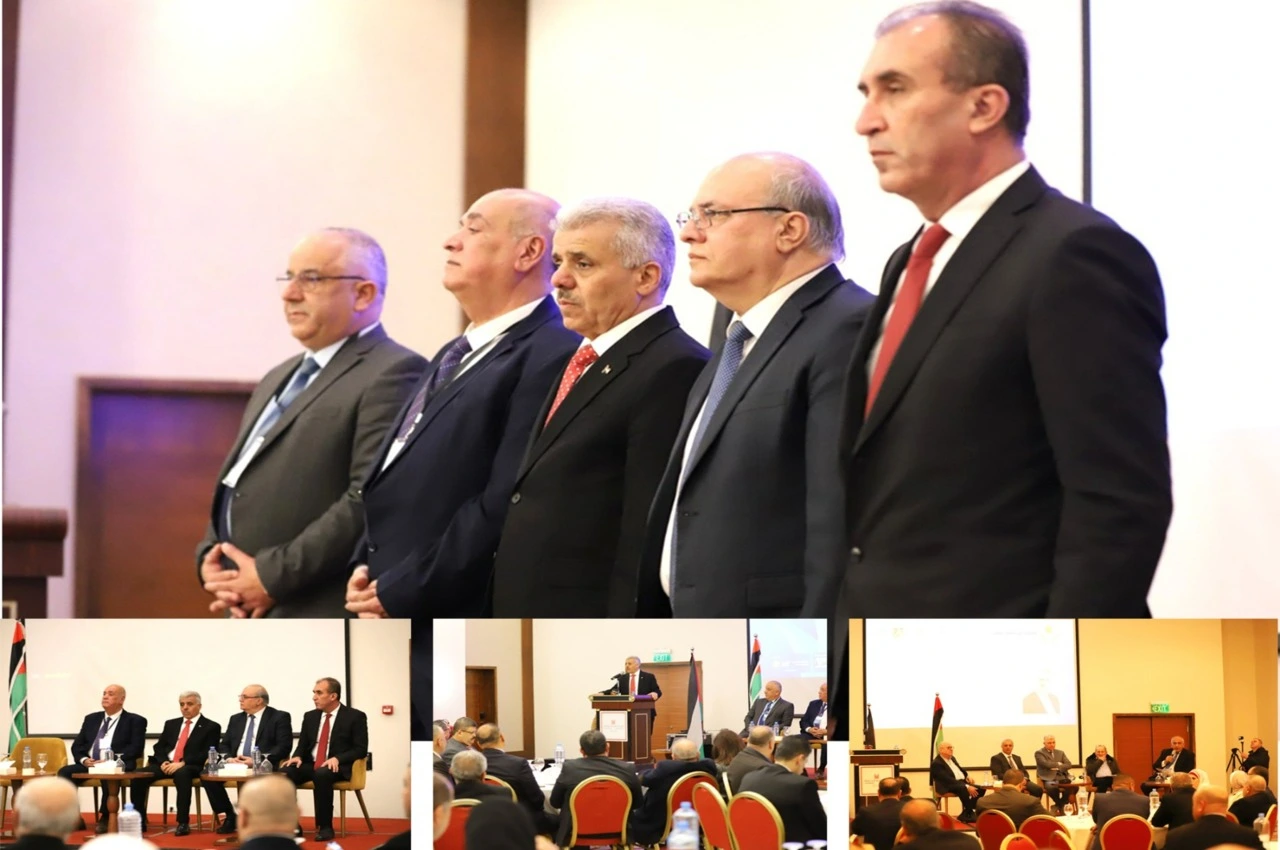
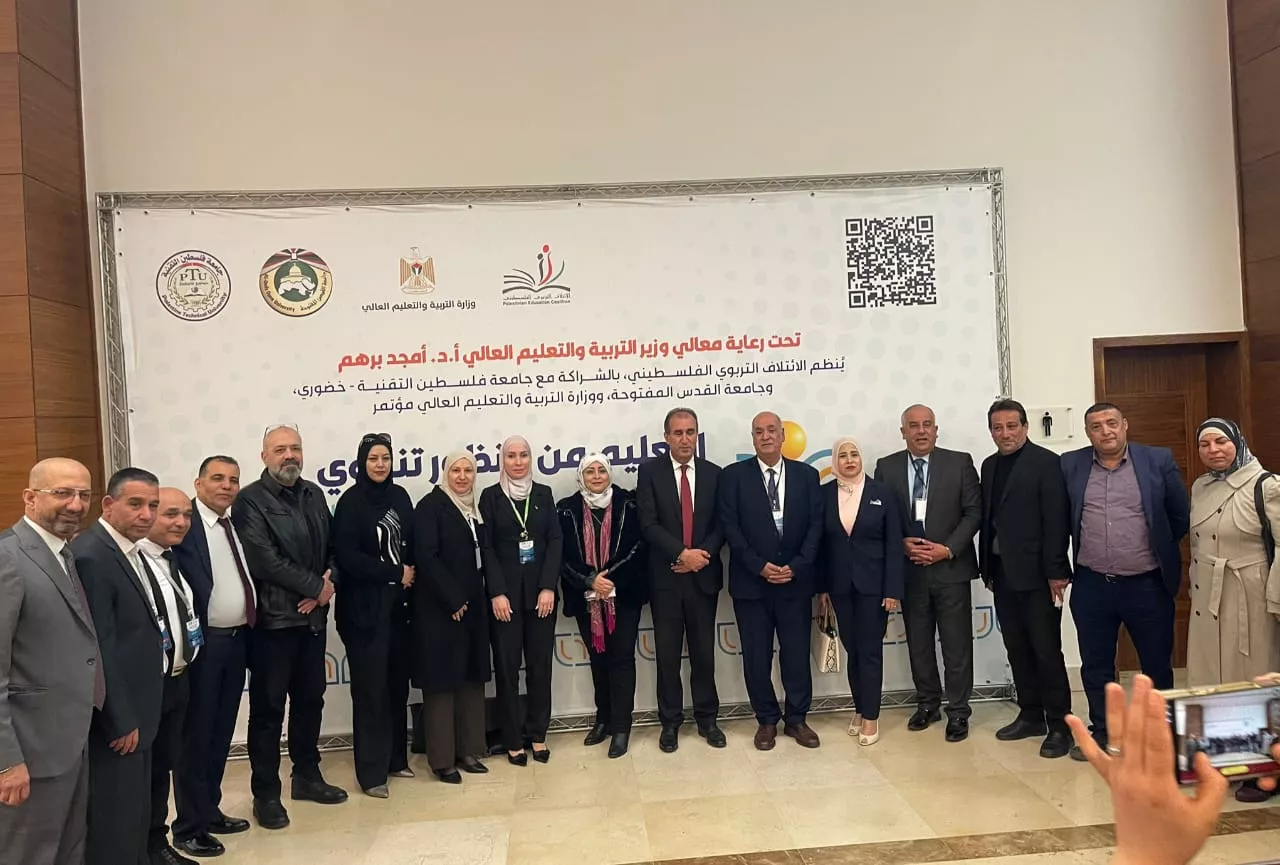
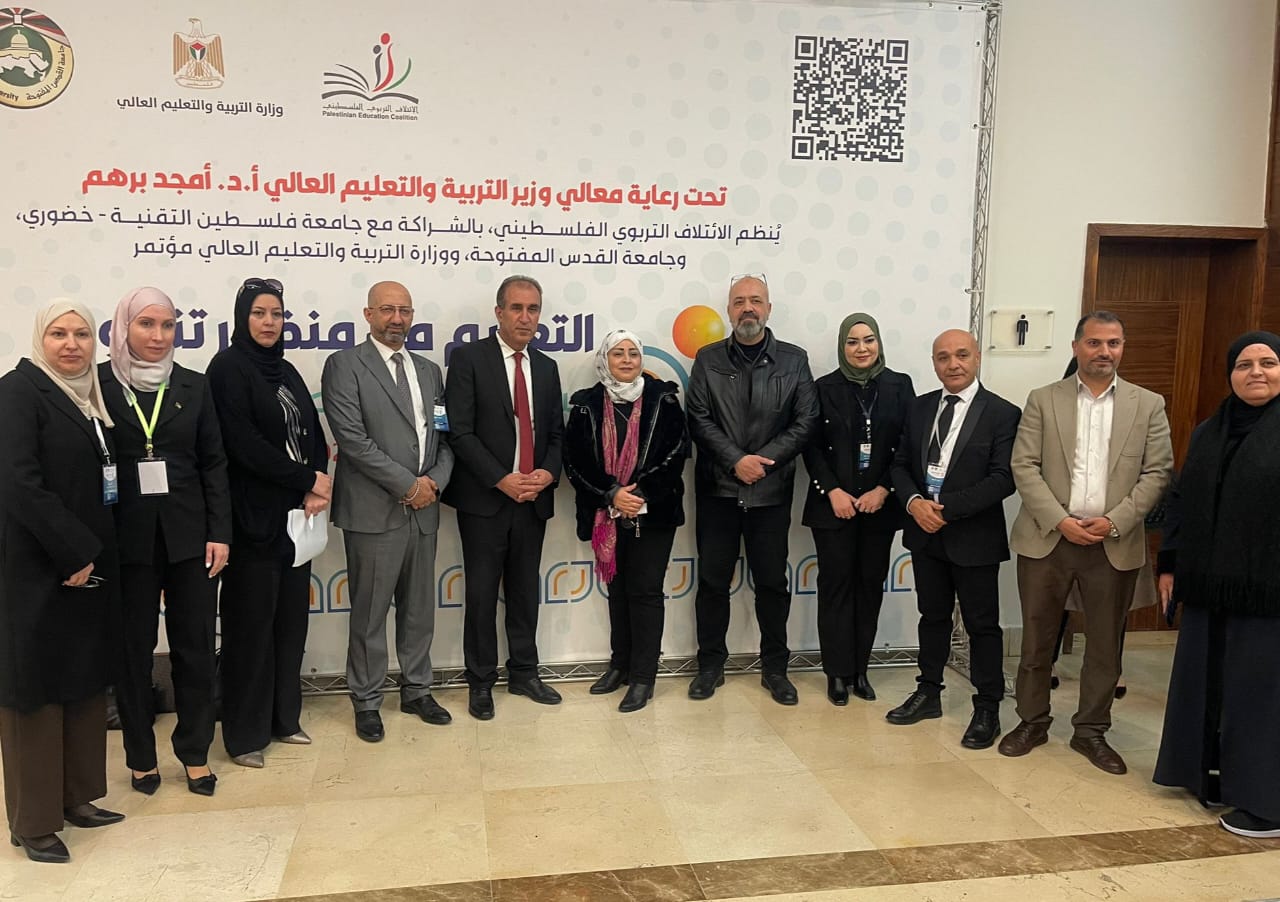
The Conference “Education from a Developmental Perspective: Pathways of Resilience and Survival” was launched today, organized by the Educational Coalition in partnership with the Palestinian Ministry of Education and Higher Education, Palestine Technical University – Kadoorie, and Al-Quds Open University.
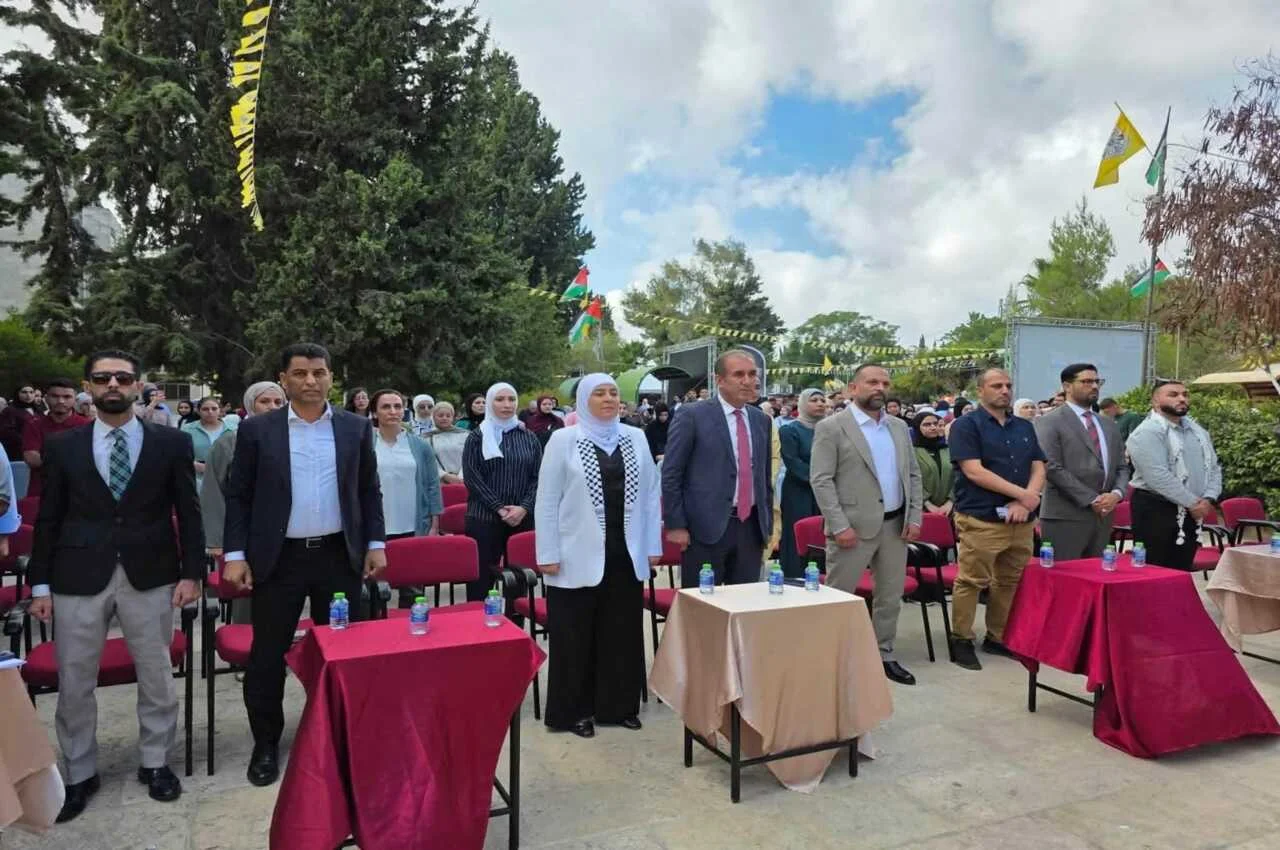
The conference brought together hundreds of specialists, educators, and academics from the West Bank, Gaza Strip, and the diaspora to examine pressing educational and developmental issues, and to discuss the challenges facing the Palestinian education system under current conditions.
Universities as Strategic Partners
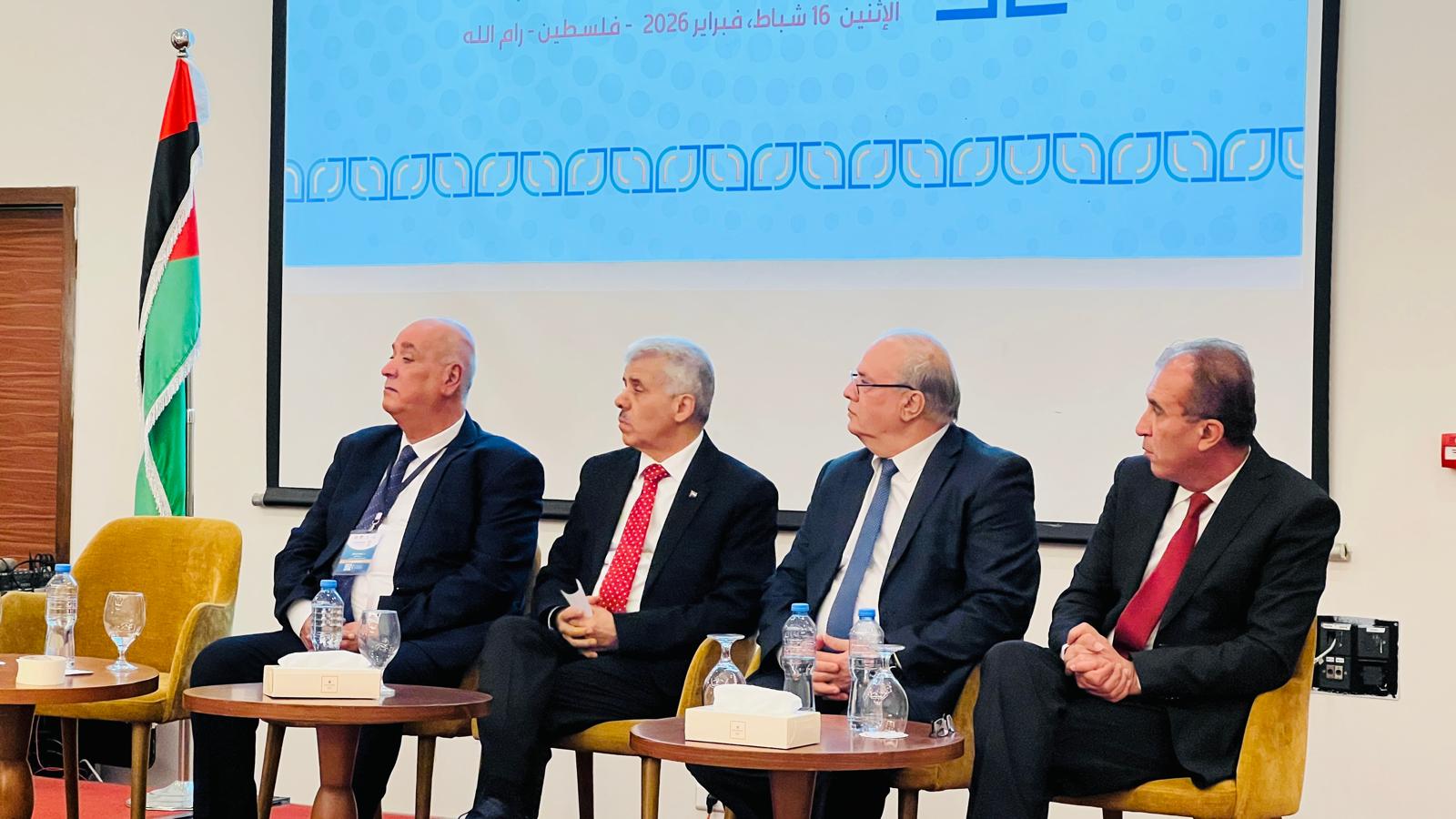
During the opening session, PTUK President Prof. Hussein Shanak emphasized that education in Palestine is a project of resilience, nation-building, and identity, rather than a conventional instructional process. He noted that the University views education as a comprehensive developmental lever that contributes to building an innovative and proactive Palestinian citizen, while strengthening alignment between educational outcomes, labor market needs, and the knowledge economy.
“This vision prioritizes digital transformation, artificial intelligence, and communication skills,”he summarized.
Prof. Shanak affirmed that Palestinian universities are strategic partners in advancing the national orientation toward “education for development” through flexible educational models that ensure continuity of learning during emergencies, while enhancing applied scientific research and national partnerships.
He concluded that PTUK’s substantive participation reflects its standing as a nationally leading university, actively contributing to shaping Palestinian educational and developmental discourse and reinforcing its role as a knowledge-producing academic institution and a core partner in building the future of education in Palestine.
Ministry of Education and Higher Education
For his part, the Palestinian Minister of Education and Higher Education Prof. Amjad Barham presented a detailed overview of the current state of the educational process, addressing reforms to the General Secondary Examination system and the daily challenges resulting from violations against schools, students, and educational staff.
He highlighted obstacles preventing teachers’ access to schools and attempts to undermine curricula, particularly in Jerusalem, while underscoring the Ministry’s efforts to ensure continuity and quality of education.
Prof. Barhamalso outlined the Ministry’s direction toward strengthening technical and vocational education, integrating modern technologies, communication skills, and artificial intelligence into the education system, and aligning them with labor market needs. These efforts, he noted, support the empowerment of the Palestinian national economy and enhance societal resilience, in line with the government’s vision of “education for development.”
The Conference as a National Necessity
Conference Chair and President of the Global Campaign for Education Dr. Rifaat Al-Sabah stressed the national importance of convening the conference at this critical juncture, given the complex challenges confronting Palestinian education and development.
Dr. Al-Sabahdescribed the conference as a vital platform for responsible national dialogue among experts and researchers from diverse backgrounds, enabling accurate assessment, internal reflection on strengths and challenges, and openness to experiences that support pathways of self-development.
He also commended the efforts of partner institutions and universities, noting that the broad participation reflects a collective belief in education as a cornerstone of development and resilience.
Conference Sessions
The conference program was structured around parallel scientific and dialogue sessions addressing education in emergencies, sustainable development, governance and financing of education, and education as a tool for social justice and empowerment. Research papers discussed themes including digital transformation, educational leadership, green education, inclusive education, and social capital building, within a national vision that reinforces resilience and survival pathways.
University Contributions
As part of PTUK’s distinguished participation, Dr. Ahmed Ammar served as the general coordinator of the conference, while Dr. Areej Jaber chaired the session on education as a tool for social justice and empowerment.
Dr. Inas Thabet and Mr. Bilal Al-Sheikh Ali participated as members of the preparatory committee, and Mr. Jebreel Hijjeh served on the media committee.
In addition, PTUK academics presented peer-reviewed research papers across the conference sessions, reflecting the University’s strong scholarly presence and the active engagement of its academic staff throughout the conference program.