Portal | Application for Admission | HRM | Email | LMS | Exam | Procedures Manual | Student Exchange | Repository | Research Journal | Jobs | 


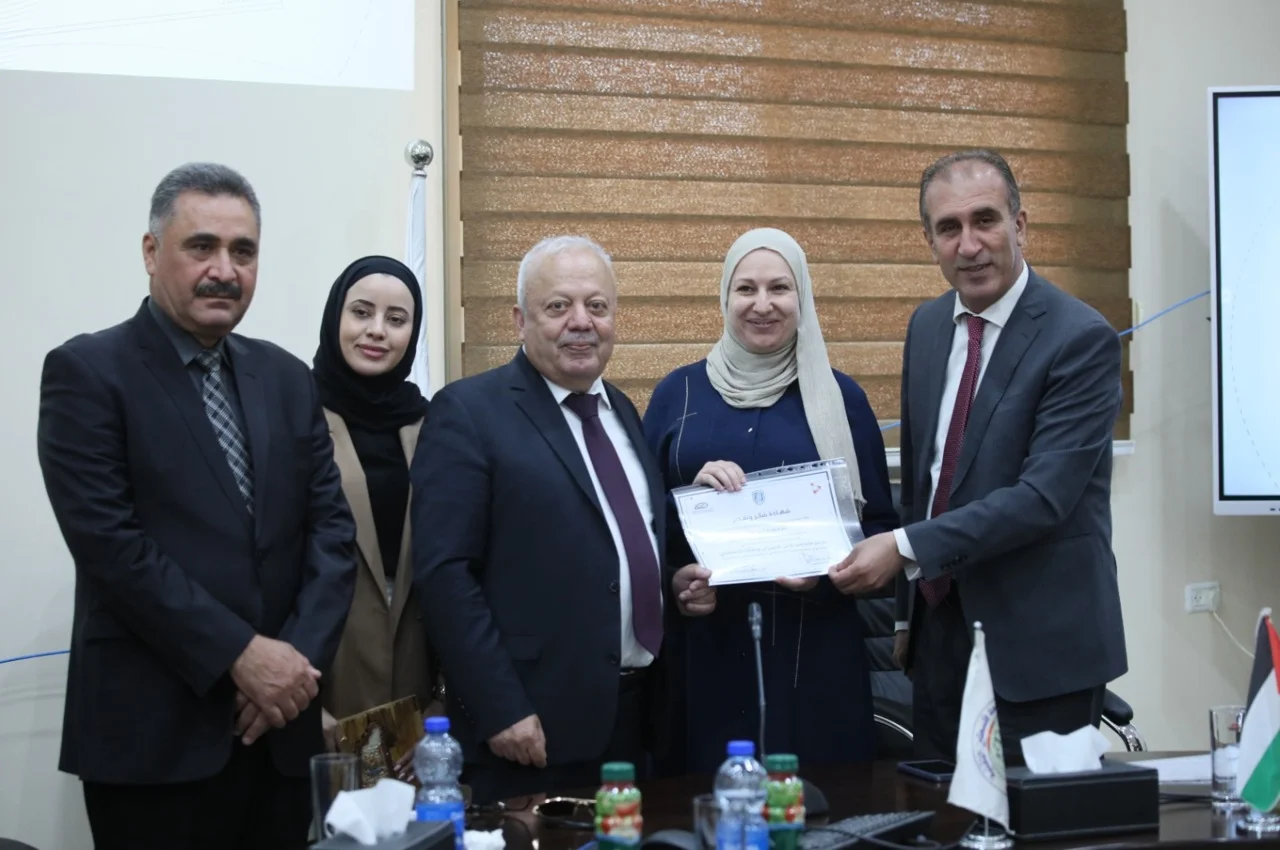
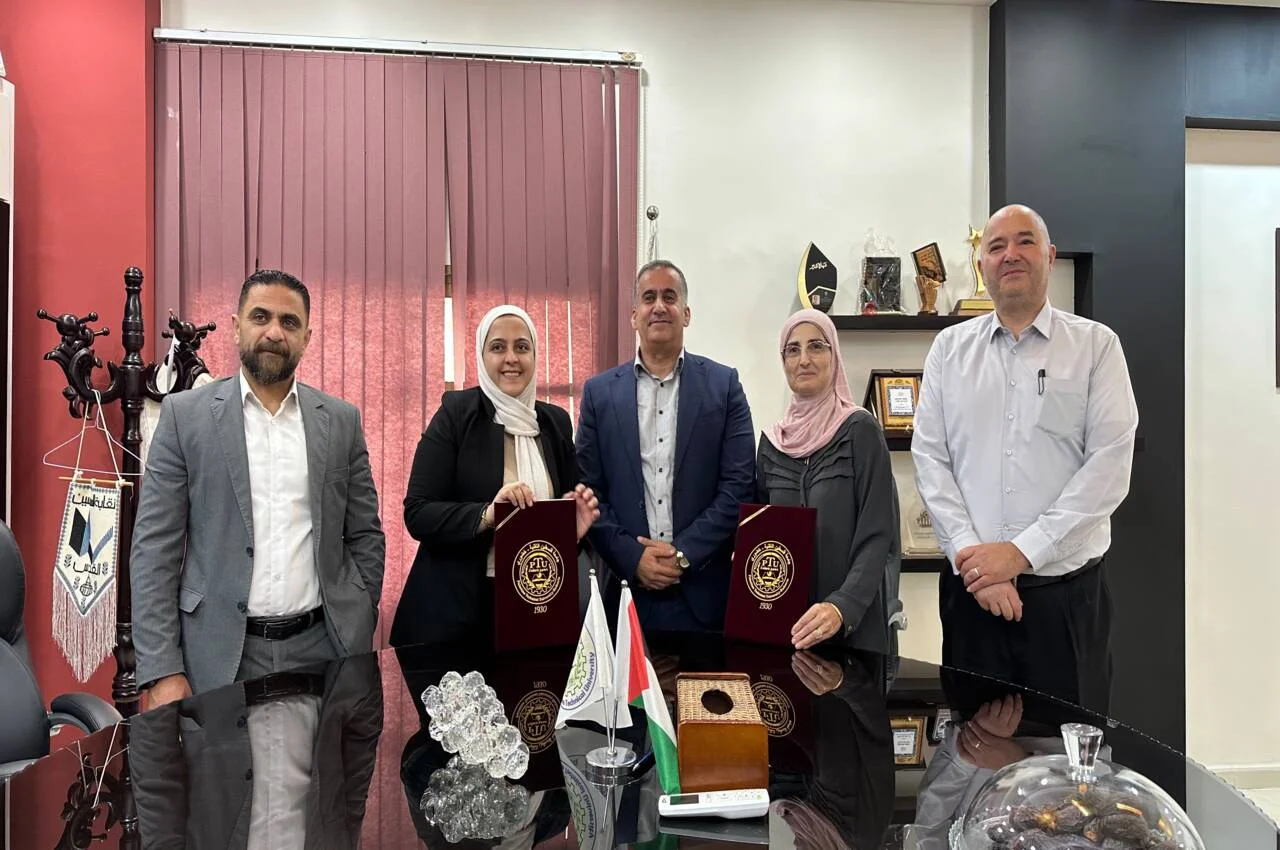
Palestine Technical University–Kadoorie (PTUK), represented by its President, Prof. Hussein Shanak, and the Palestine Institute for National Security Research, represented by its Director General, Dr. Habis Al-Shurouf, signed a Memorandum of Understanding aimed at enhancing joint cooperation in the fields of scientific research, strategic studies, training, and the implementation of academic and cultural programs and activities of mutual interest.
The agreement seeks to support national knowledge production and strengthen the role of scientific research in serving society.
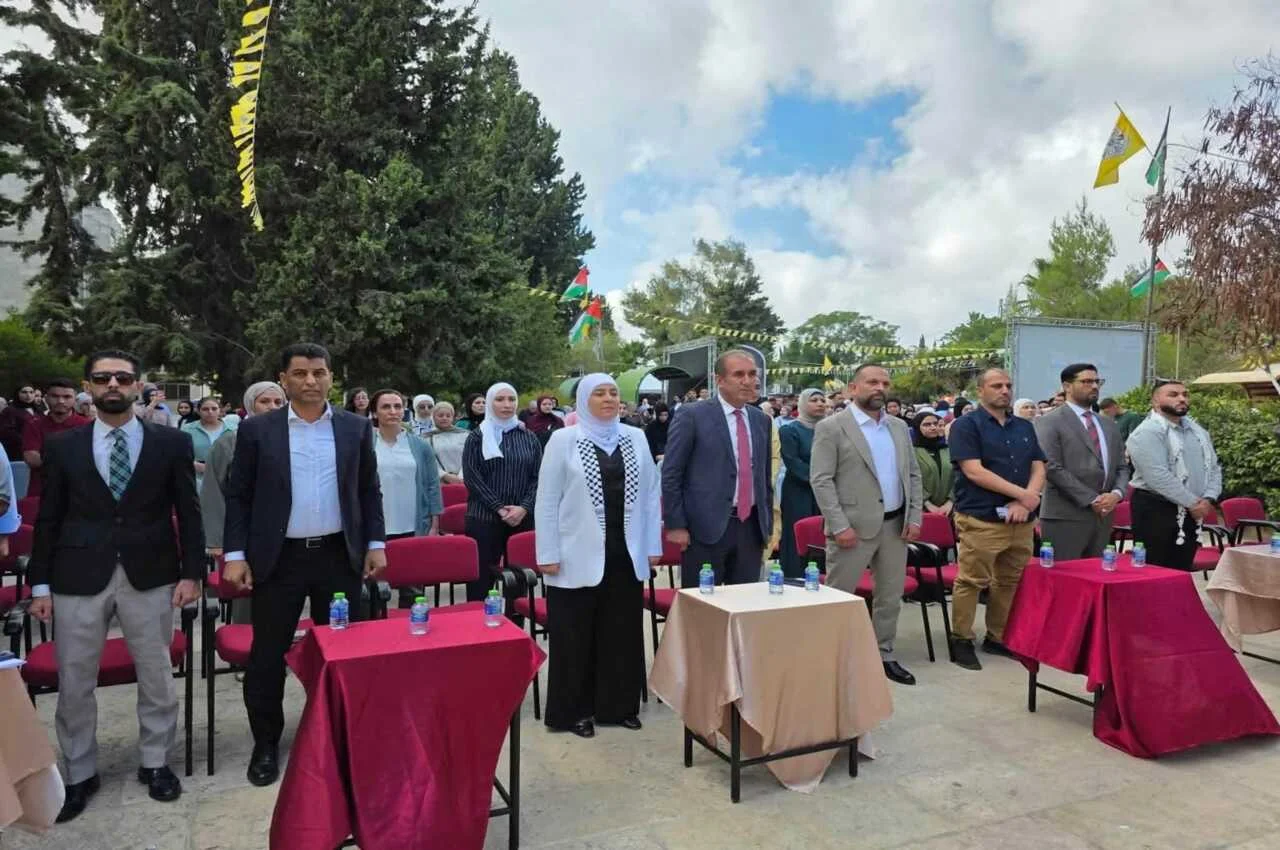
The signing ceremony was attended by the University's vice presidents, assistants to the president, deans of faculties, members of the academic and administrative staff, representatives of the employees' union, and members of the university's Fatah movement office. The institute was represented by its advisors, assistants to the Director General, and a number of researchers and administrative staff.
Prof. Hussein Shanak affirmed that PTUK continues to pursue its developmental vision aimed at enhancing the quality of higher education and strengthening its academic and research standing at both the national and international levels. He noted that the University remains committed to developing its academic programs and introducing high-quality disciplines that respond to rapidly changing developments and labor market needs.
Prof. Shanak emphasized that students remain at the heart of the University's priorities, highlighting PTUK's efforts to provide a supportive learning environment that fosters excellence and creativity, alongside a diverse range of scholarships and financial aid opportunities that enable students to pursue their academic and professional aspirations.
He further noted that the University has achieved significant progress in internationalization in recent years by expanding its network of global partnerships, student and academic exchange programs, and collaborative scientific, developmental, and research initiatives with local and international institutions, universities, and research centers. These efforts, he said, have positively impacted the quality of education and its outcomes.
Prof. Shanak explained that the memorandum with the Palestine National Security Research Institute represents an important step toward strengthening collaboration between the University and national research institutions through the implementation of joint studies and research projects, the organization of scientific conferences and seminars, the provision of research fellowship opportunities, and the exchange of expertise and scientific publications, all of which contribute to addressing national issues and advancing specialized knowledge.
For his part, Maj. Gen. Dr. Habis Al-Shurouf, Director General of the Palestine National Security Research Institute, stressed the importance of building effective partnerships with Palestinian universities and higher education institutions, describing them as essential partners in knowledge production, policy development, and the promotion of sustainable national development.
Dr. Al-Shurouf stated that the Institute believes in the importance of integration between political and governmental institutions on the one hand and academic and research institutions on the other. He emphasized that this integration should become deeper and more influential in the coming phase to support strategic planning and national decision-making processes.
He added that the partnership with PTUK represents a model for cooperation between scientific research and higher education institutions, contributing to the advancement of applied and policy-oriented studies related to national and strategic issues, while providing researchers and academics with meaningful opportunities to contribute to the production of rigorous scientific knowledge.
Dr. Al-Shurouf further explained that the Institute operates according to an independent and objective scientific methodology grounded in academic neutrality, ensuring the provision of research findings and analytical insights that support decision-makers, researchers, and national institutions.
He noted that the Institute publishes a peer-reviewed scientific journal and manages a specialized online platform dedicated to studies, research papers, and scholarly publications. It also regularly organizes scientific conferences, workshops, policy dialogues, and both open and closed discussion forums addressing a broad range of national and strategic issues.
Providing an overview of the Institute, Dr. Al-Shurouf explained that it is a specialized national research institution comprising several research units and departments focusing on political, security, strategic, economic, and social studies. The Institute seeks to promote a culture of research and provide scientific knowledge that supports public policy development.
He also praised PTUK's distinguished academic standing, attributing it to the quality of students it attracts and the caliber of graduates it produces—graduates equipped with knowledge, leadership, innovation, and competitiveness. He noted that this reflects the strength of the University's educational environment and academic staff across its main campus in Tulkarm and its branches in Ramallah and Al-Aroub.
Dr. Al-Shurouf added that the University has become a destination of choice for outstanding students from across the country, benefiting from its strong academic reputation, specialized programs, and learning environment that nurtures excellence and creativity.
The agreement outlines cooperation in conducting and supporting joint research and studies, preparing scientific and strategic reports and opinion surveys, implementing educational, training, and cultural programs of mutual interest, offering research fellowships, exchanging scientific publications and information, organizing joint conferences and seminars, and sharing expertise. It also includes collaboration in developing academic courses that deepen students' understanding of Palestinian national security issues while strengthening their sense of identity and national belonging, thereby opening new avenues for cooperation between the two institutions in support of scientific research and national development.